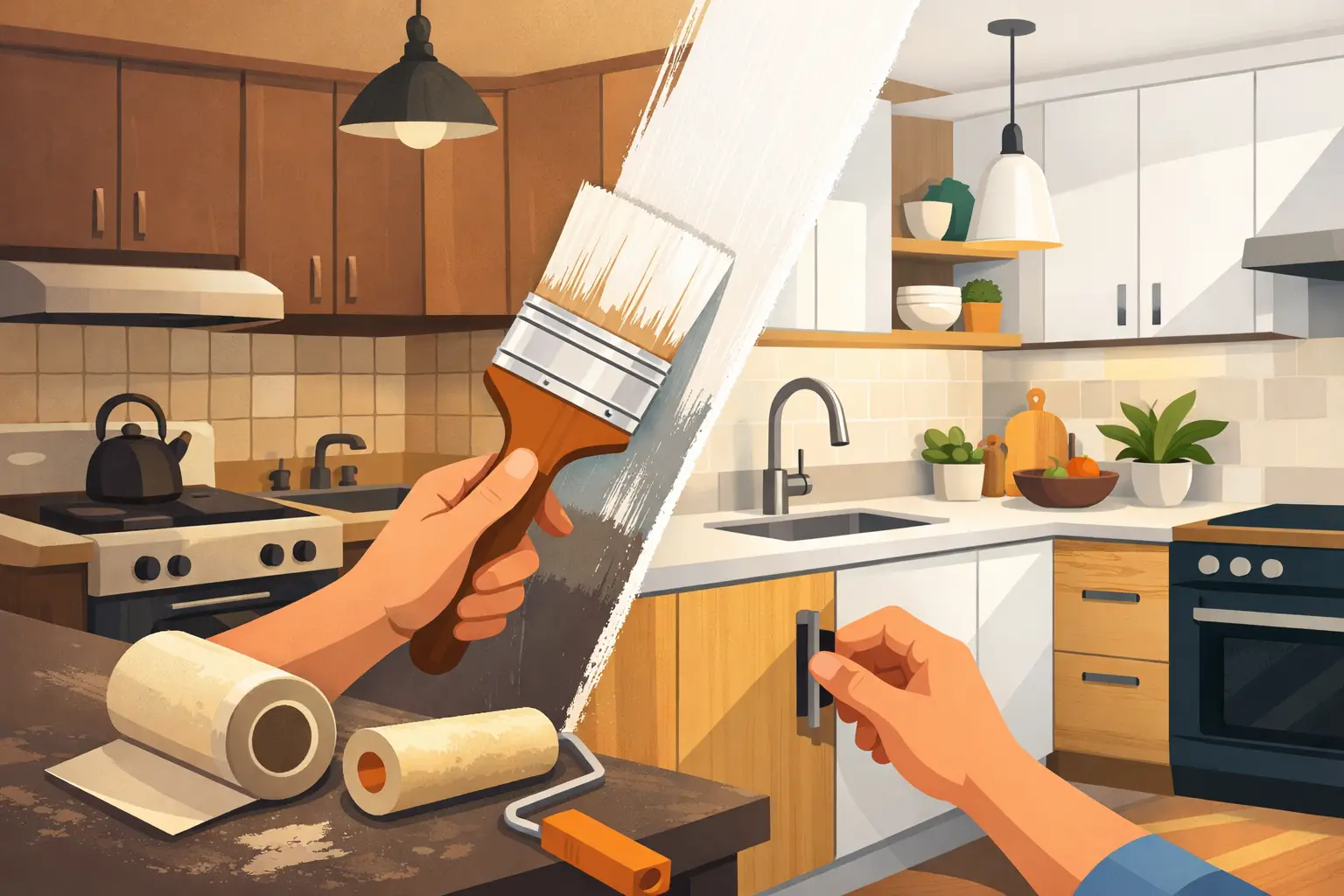
If your kitchen looks tired but the layout still works, the big question isn’t “Can I live with it?”—it’s “Do I really need to rip it out?” Most homeowners around Dublin, Wicklow, Kildare, Meath and Louth are weighing the same trade-off: a fresh, like-new finish for a fraction of the upheaval, or a full replacement that promises a brand-new kitchen but brings higher costs and longer disruption.
This kitchen respray vs replacement cost comparison isn’t about pushing one option for every home. It’s about helping you understand where the money goes, what you actually get back in day-to-day value, and when replacement genuinely earns its keep.
The cost comparison: what you’ll typically pay
For most households, the headline difference is stark. A professional kitchen cabinet respray is usually a fraction of the price of replacing units, doors and panels—before you even get to worktops, plumbing or electrics.
Respraying costs are driven by the number of doors and drawer fronts, the condition of the existing surfaces, the amount of preparation needed (degreasing, sanding, repairs), and the finish you choose. A simple colour change on structurally sound cabinets will sit at the lower end. If you want a premium painted finish on a larger kitchen with detailed profiles and end panels, you’ll be higher.
Replacement costs, on the other hand, start with cabinetry but rarely stop there. Even if you keep your existing layout, you may need new worktops, a sink, taps, splashback, and new appliances to suit the updated look. Labour is also more involved: removal, disposal, fitting, and often additional trades.
In practical terms, many Irish homeowners find respraying is commonly in the low-thousands range, while full replacement tends to move into the high-thousands quickly once everything is included. The important point isn’t a single figure; it’s that replacement pricing has more “hidden multipliers” that push budgets upwards.
What’s actually included (and what catches people out)
One reason kitchen replacement bills escalate is that the quote you first look at may not be the final spend. A showroom price for cabinets can look manageable until you factor in fitting, plumbing, electrical adjustments, tiling, disposal and the inevitable “while we’re at it” extras.
With respraying, costs are usually easier to scope because you’re improving what you already have. The biggest variables are preparation and access. If cabinets are heavily worn, swollen from water damage, or coated in years of silicone and grease, more prep is required. But you’re generally not paying for a chain of trades, and you’re not paying to replace items that still do their job perfectly well.
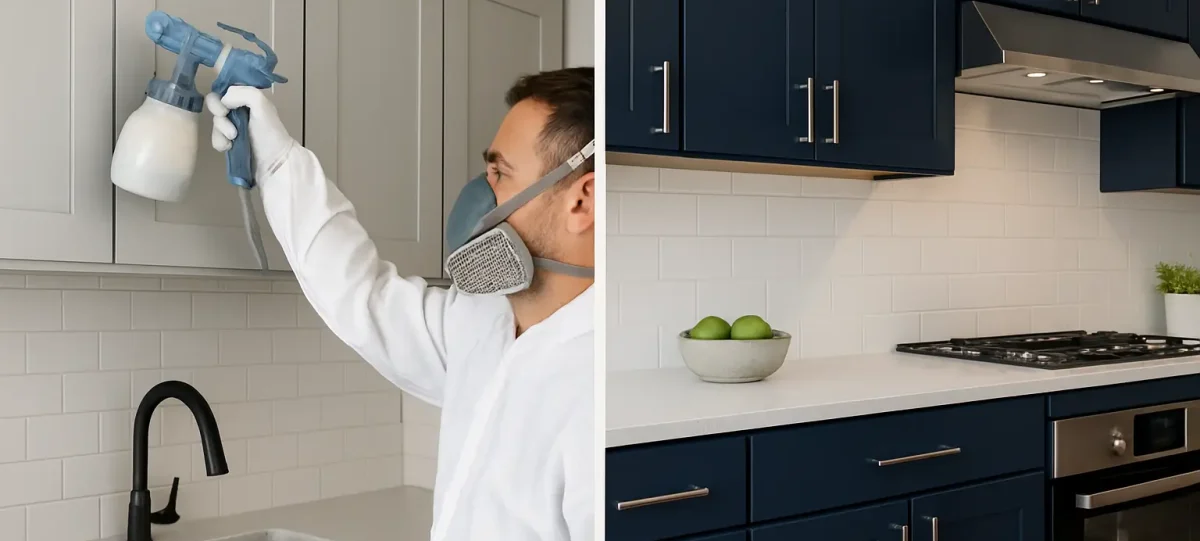
If you’re comparing quotes, make sure you’re comparing like with like. A proper replacement cost should include removal and disposal, fitting, any plastering/tiling repairs, and the cost of getting the kitchen back to a finished standard. A proper respray cost should include thorough prep, professional spray application (not brush-and-roller work), and a clear explanation of what is and isn’t being sprayed.
Time and disruption: the part homeowners underestimate
Money matters, but living through the work matters too.
A respray is often completed quickly because the structure stays put. There’s far less demolition, less noise, and typically less dust. That can be the deciding factor for families, people working from home, or anyone who simply doesn’t want the house turned upside down.
Replacement tends to take longer, and it’s more disruptive by nature. Even a straightforward swap involves removing the old kitchen, dealing with walls and floors that look worse once units are gone, coordinating deliveries, and waiting on multiple stages of fitting. If anything is delayed—worktops are a common pinch point—your “short renovation” can stretch.
Time is a cost. It shows up as takeaway meals, lost time off work, and the mental load of living around trades.
The finish: what respraying can (and can’t) change
Respraying is best thought of as a transformation of appearance and feel, not a change of layout.
If your cabinets are structurally sound, respraying can deliver a stunning, factory-like finish in modern colours—clean whites, warm neutrals, deep greens, charcoals, or classic greys—without changing the kitchen footprint. It’s also an excellent way to modernise dated timber tones or patchy, mismatched doors.
Where respraying won’t help is when the underlying design no longer serves you. If you need to move appliances, open up a wall, relocate plumbing, or add storage that simply isn’t there, you’re now talking about a remodel. At that point, replacement (or a larger renovation) can make sense because you’re paying to solve functional problems, not just visual ones.
There’s also a middle ground: keep the cabinets, respray the doors, and upgrade hardware, lighting and perhaps the worktop. That combination often delivers the “new kitchen feeling” without the full replacement bill.
Worktops: why they can swing the whole decision
Worktops are often the first surface you see and touch, so they heavily influence whether a kitchen feels modern.
If your cabinets are fine but your worktop is chipped, burned or dated, you don’t necessarily need a full replacement. Many homeowners choose to respray cabinets and update only the worktop. Others look at specialist options that give the look of stone without the cost and upheaval of a full rip-out.
A particularly effective approach is refinishing existing surfaces so the whole kitchen reads as cohesive. For example, combining cabinet respraying with a professional spray granite finish can bring the worktop into the same “like-new” standard, giving you a coordinated result that feels intentional rather than piecemeal.
Durability and longevity: what affects wear over time
A fair kitchen respray vs replacement cost comparison has to account for how the finish holds up.
A professional spray finish is designed to be durable for everyday life—cooking steam, frequent wiping, and the knocks that come with busy households. Longevity depends on two things: the quality of preparation and the quality of application. Proper degreasing, careful sanding, attention to edges and profiles, and controlled spraying conditions are what separate a finish that lasts from one that chips early.
Replacement durability varies massively because “new” doesn’t always mean “better”. Flat-pack units and budget laminates can look great on day one and still be more vulnerable than solid existing cabinets that have already proven their strength over years. If your current units are sturdy, keeping them and upgrading the finish can be the more sensible long-term move.
Sustainability: the quiet advantage of keeping what works
Many homeowners like the idea of a greener renovation, but they also want it to feel practical rather than preachy.
Respraying is inherently more eco-friendly because it reduces waste. You’re not sending perfectly serviceable carcasses to landfill, not buying new boards and packaging, and not triggering the same level of transport and manufacturing footprint. It’s a straightforward way to refresh the home while being more considerate about what gets thrown away.
Replacement can still be done responsibly, but it requires more conscious choices: recycling where possible, selecting long-lasting materials, and avoiding “fast kitchen” purchases that will be replaced again in a few years.
When respraying is the smarter spend
Respraying tends to be the best-value option when your kitchen is fundamentally sound and the main issue is appearance. If doors are dated, colours are wrong, or the finish has worn unevenly, respraying offers an affordable route to a dramatic upgrade. It’s also ideal when you want minimal disruption, or when you’re improving the home ahead of a sale and need maximum visual impact without overcapitalising.
Homeowners often feel relief when they realise they don’t need to start from scratch to get a kitchen they’re proud of.
When replacement genuinely makes sense
Replacement earns its higher price tag when you’re solving bigger problems: damaged cabinets that have swollen or crumbled, a layout that doesn’t work for how you cook, or a need to reconfigure plumbing and electrics. If you’re constantly battling for storage, or you want an island where there simply isn’t room in the current run, replacement is less about appearance and more about functionality.
If you’re already planning structural changes—new flooring throughout, moving doorways, building work—then replacement may fit naturally into that broader project.
How to decide in one viewing of your own kitchen
Stand in your kitchen and look past the colour. Open and close the doors. Check whether the cabinets feel solid and square. Look for water damage under the sink and around the dishwasher. Notice if drawers still run smoothly. If the bones are good, respraying is often the most cost-effective route to a stunning result.
Then ask yourself what you’re truly missing. If it’s a cleaner look, modern colour and a more premium feel, respraying plus a few targeted upgrades can be transformative. If it’s space, flow and layout, you’re likely in replacement territory.
For homeowners who want a trusted, professional transformation without the hassle of a full renovation, Dublin Kitchen Respray has been delivering high-quality kitchen and cabinet resprays across the region since 1999.
A final thought to guide you: the best kitchen decision isn’t the one that costs the most—it’s the one that fixes the real problem you live with every day.