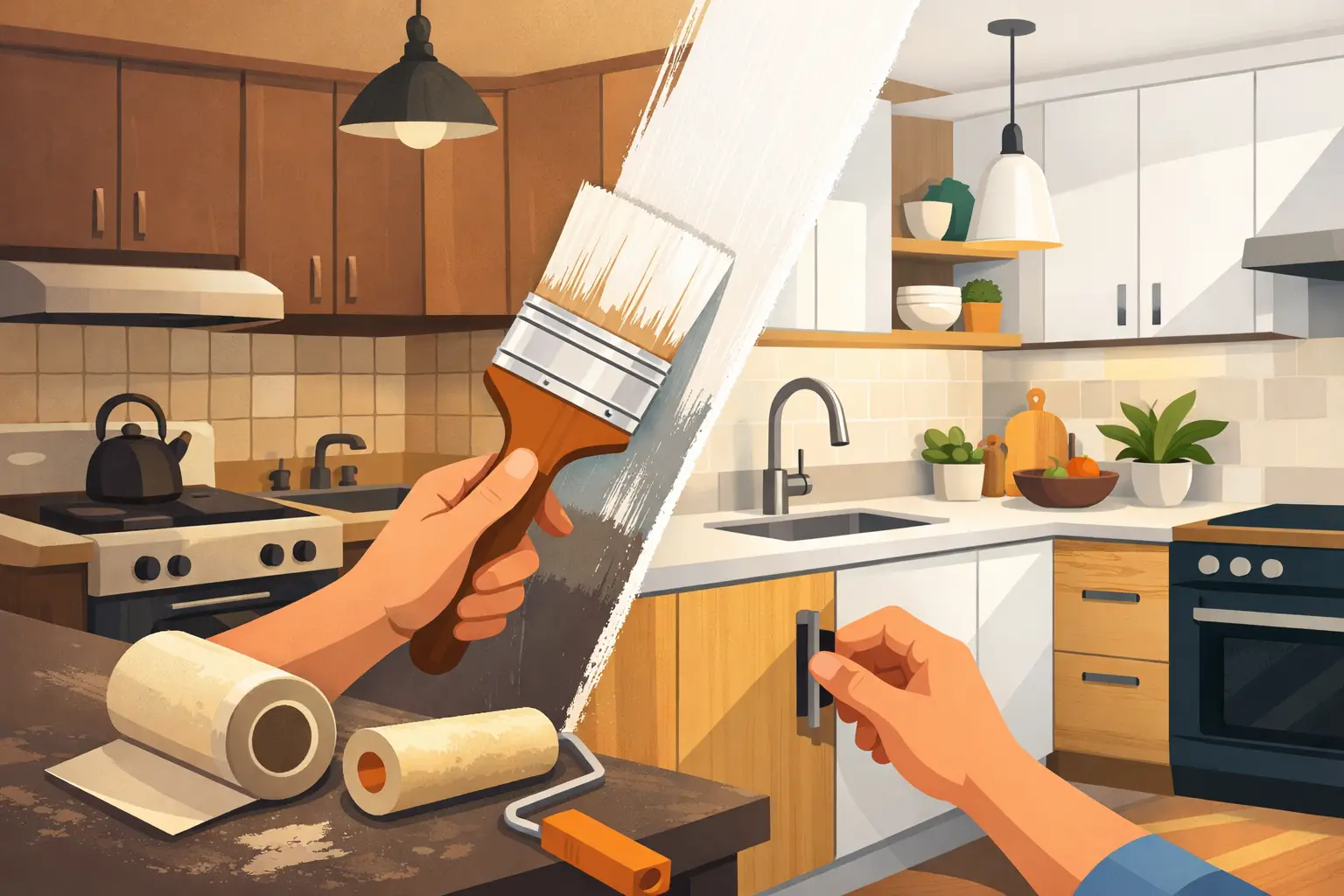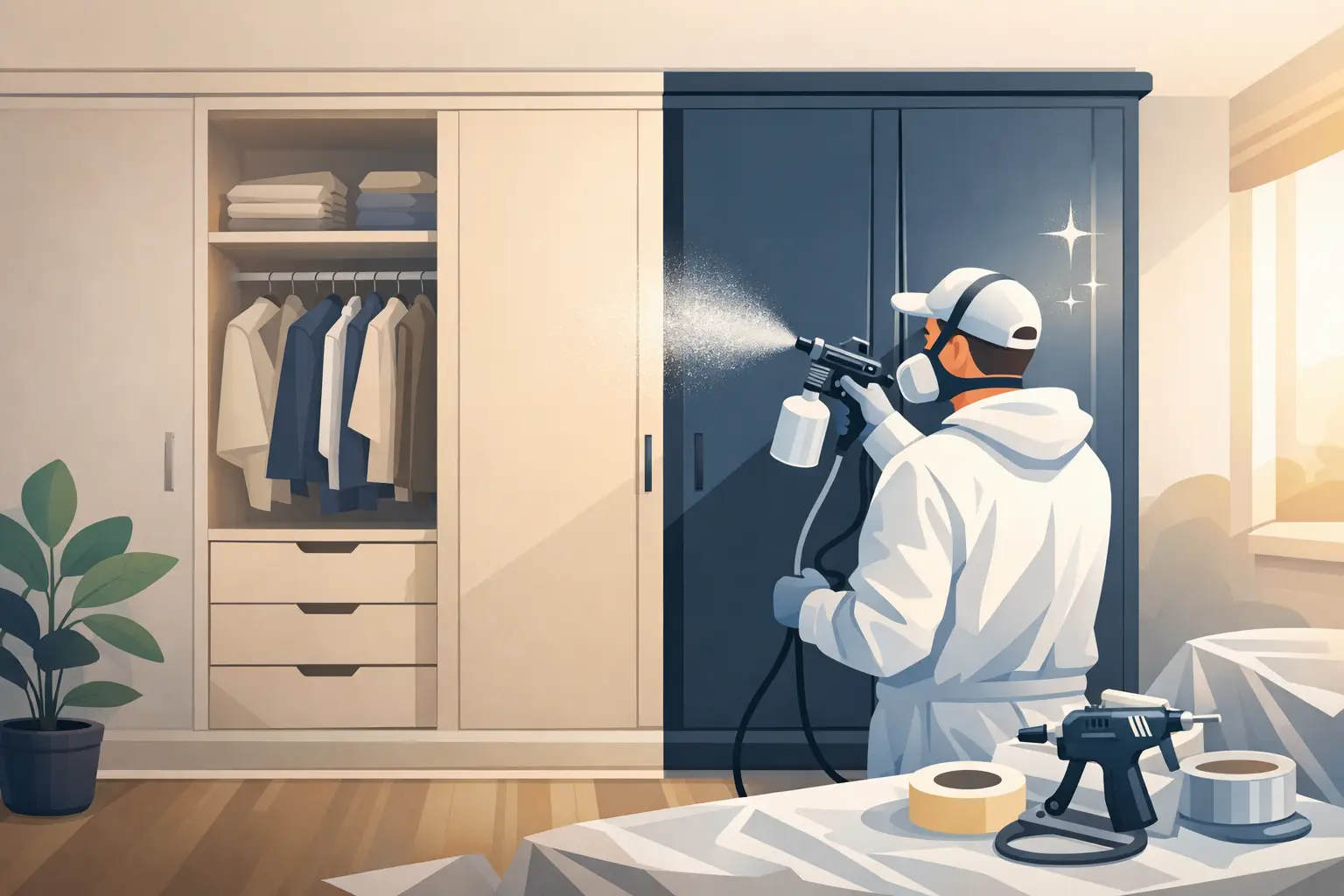
Can you respray your kitchen yourself?
Yes, you can respray my kitchen yourself. Plenty of homeowners try it, and some even get a decent finish. But the real question is: will it look professional and will it last?
Kitchen cabinets take a daily beating. Heat, steam, grease, cleaning products, constant opening and closing, kids pulling handles, mugs banging doors. A respray that looks fine on day one can start chipping around corners and handles if the preparation, primer, or topcoat are wrong.
So if you’re thinking of DIY, it helps to understand what’s actually involved and where most people go wrong. Then you can decide whether this is a weekend project or something better left to professionals.
What a proper kitchen respray involves
A lot of DIY attempts fail because people underestimate the work before any paint is sprayed. The spraying itself is the easy part. The prep is where the finish is made.
A proper respray process usually includes:
Removing doors and drawers
Labeling everything so it goes back in the right place
Deep cleaning and degreasing
Sanding and keying the surface
Priming with a bonding primer suited to the material
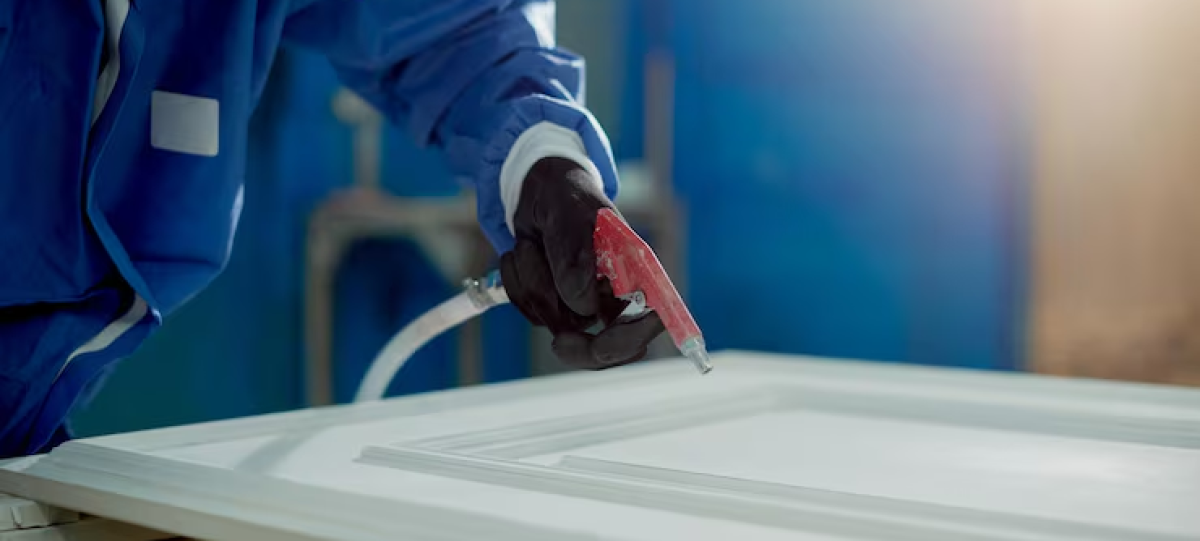
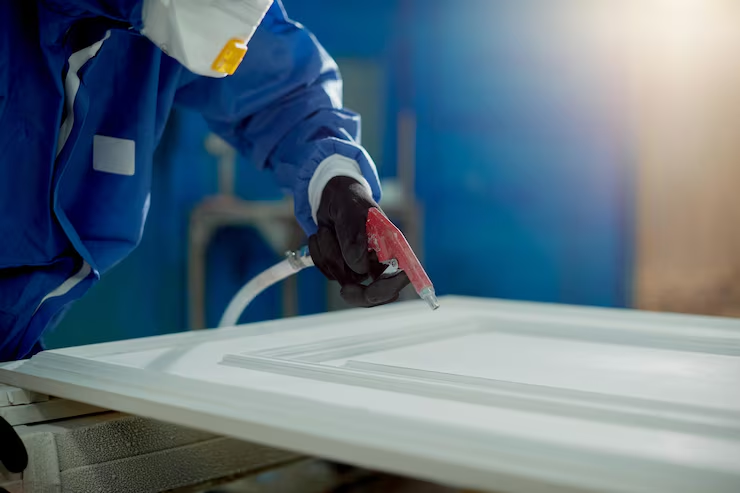
Spraying thin, even coats
Allowing enough time to dry and cure
Rehanging and aligning doors properly
If you want to understand what’s included in a professional service, the best reference is the full service breakdown here: Services.
DIY can follow the same principles, but doing it at home has a few challenges.
The biggest DIY challenge: environment and dust
Spraying a kitchen finish in a typical home environment is tricky because cabinets need clean air and controlled conditions.
Even if you clean and sand perfectly, airborne dust can settle into wet paint and leave a rough texture. Temperature and humidity can also affect how paint lays down and cures. A finish that dries too fast can look patchy. One that dries too slowly can collect dust and marks.
This is why many DIY resprays end up looking “okay from far away” but uneven up close.
Tools you realistically need for a DIY respray
If you’re serious about getting a spray finish, you’ll need more than a brush and a tin of paint.
Most DIYers who want a good result look at:
A decent spray system (or a high quality sprayer)
A proper degreaser
Sandpaper in multiple grits
A bonding primer matched to your cabinet type
A durable topcoat suitable for kitchens
Masking materials to protect floors and walls
A clean, ventilated space for spraying and drying
If you don’t have a suitable space to spray doors and let them cure safely, that’s often the deciding factor.
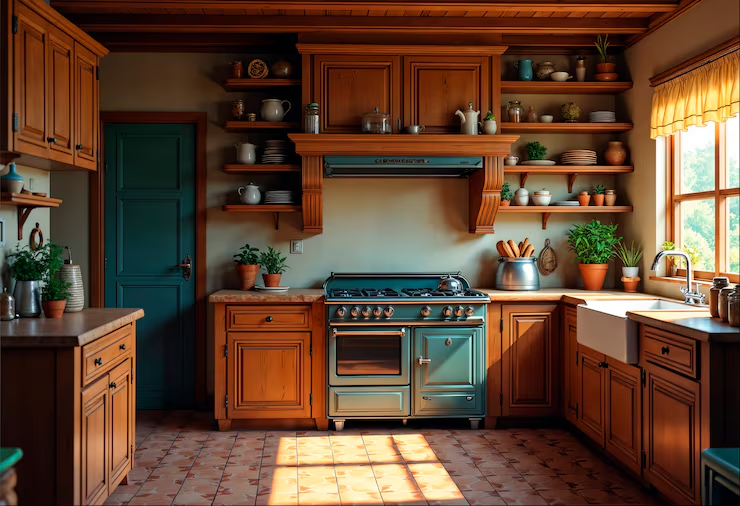
What cabinets can you respray yourself?
In general, many kitchen doors can be resprayed, but some are more DIY-friendly than others.
Solid wood and MDF are usually straightforward if prepped properly.
Previously painted doors can work, but only if the existing paint is stable and sanded correctly.
High gloss doors can be resprayed, but they need the right bonding approach.
Vinyl wrapped doors can be the hardest because peeling edges and heat exposure can cause problems if not handled correctly.
If you’re unsure what you have, you can still start by inspecting edges and corners. That’s where weaknesses show up first.
The most common DIY mistakes (and how to avoid them)
If you want your DIY respray to last, avoid these issues.
Skipping degreasing
Kitchens build up a layer of grease you often cannot see. If you sand over grease, you spread it into the surface. Paint won’t bond correctly and the finish can peel in high-touch areas.
Using the wrong primer
Primer is not optional. Primer is the glue between your cabinet surface and the topcoat. Using a generic primer on a slick surface is one of the biggest reasons DIY resprays fail.
Spraying heavy coats
Thick coats lead to drips, orange peel texture, and soft paint that dents easily. Thin coats take more patience but give a stronger, smoother result.
Not letting paint cure
Dry is not the same as cured. Doors can feel dry to touch and still be soft underneath. If you rehang too early, you can get sticking, marks, and chips around hinges and handles.
Ignoring hardware details
Handles and hinges areas often show the most wear. If you don’t prep these spots properly, they’ll be the first places that chip.
DIY vs professional: how to decide quickly
Here’s a simple way to decide without overthinking.
DIY makes sense if:
You have a small kitchen or fewer doors
You enjoy hands-on work and can be patient
You have a clean space to spray and dry doors
You can accept minor imperfections
You want to learn and save money
Professional respraying makes sense if:
You want a factory-smooth finish
You have a larger kitchen with many doors
Your cabinets have damage, grease build-up, or old paint
You want a durable finish that holds up long term
You want minimal disruption and faster completion
If you want to compare what you’d spend on tools and materials versus hiring a professional, reviewing the service scope can help: Services.
Colour choice can make DIY harder or easier
Even before you spray, colour choice matters.
Very dark colours can highlight imperfections and fingerprints.
Very bright whites can show marks and need good prep to look even.
Mid tones and softer neutrals are often more forgiving.
If you’re stuck deciding, it helps to look at popular, proven choices that work well in Irish homes and lighting conditions: Most Popular Kitchen Respray Colours in Ireland.
This also reduces the risk of finishing a full DIY respray and then feeling unsure about the final look.
If you hire someone, what should you check first?
If you decide DIY is not for you, the next smart step is knowing what to ask before you hire anyone.
Not all quotes include the same level of prep, primers, or finishing process. If someone is much cheaper, you want to know exactly what is being skipped.
A helpful checklist is here: Top Questions to Ask Before Hiring a Kitchen Respray Company in Dublin.
It’s the quickest way to avoid paying for a job that looks good for a month and then starts failing.
A practical middle option: partial DIY
Some homeowners choose a hybrid approach:
They do the deep cleaning and remove doors
They change handles themselves
They let professionals do the prep, spray, and finish
This can work well if you want to save time or costs without risking the quality of the spray finish.
So, can you respray your kitchen yourself?
Yes, you can. But if you want it to look smooth, durable, and consistent across every door and drawer, you need the right prep, products, tools, and space.
If you have the patience and setup, DIY can be rewarding. If you want a top-tier finish that lasts and you want it done with less stress, professional spraying is often the better option.
If you want to understand what’s included in a full respray service and what the process covers, start here: Services.
FAQs
Can I respray my kitchen with a roller instead of spraying?
You can repaint with a roller, but it rarely looks like a sprayed finish. Spray gives a smoother, more factory-style result.
How long does DIY kitchen respray take?
If you include cleaning, sanding, priming, coats, and cure time, it can take several days to over a week depending on your time and setup.
Will DIY respray last?
It can, if prep and primer are done correctly and the right durable topcoat is used.
What colour is easiest for a DIY respray?
Mid-tone neutrals and satin finishes are often forgiving. If you want popular colour inspiration, this guide helps: Most Popular Kitchen Respray Colours in Ireland.What should I ask a respray company before hiring?
Ask about prep, primers, durability, protection, and what’s included. Use this checklist: Top Questions to Ask Before Hiring a Kitchen Respray Company in Dublin.